
A renovation company in South Wales has been handed a £40,000 fine after a catalogue of failures, including defying enforcement notices issued by the Health and Safety Executive (HSE).
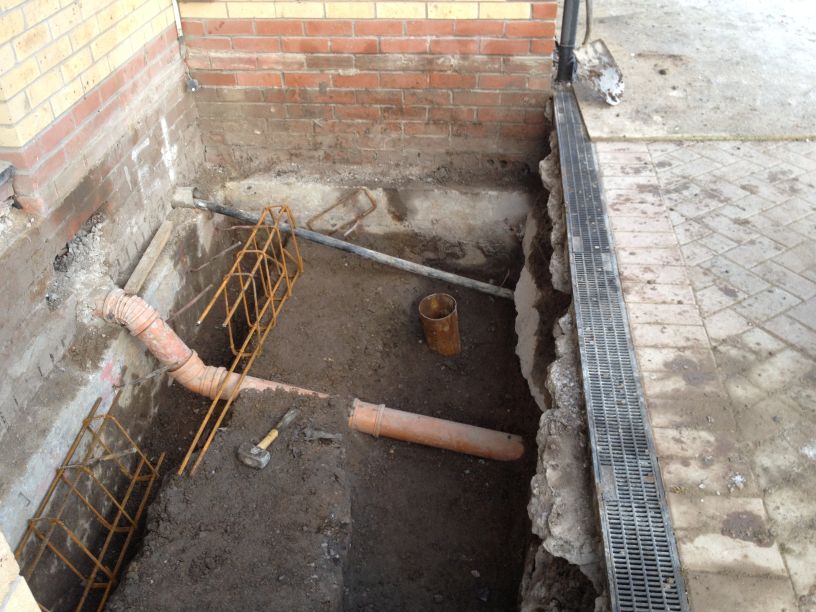
In September 2023, the HSE undertook an inspection at a house in Aberdare, following reports of unsafe construction work being undertaken there by the company. Inspectors observed employees working within an excavation that was approximately 2.5 metres deep; the sides of the excavation were vertical, leaving a risk of rubble subsiding or collapsing without warning; the site had not been secured to prevent unauthorised access; and there was no risk assessment for the refurbishment works and no safe system of work. The inspection was conducted while the managing director was present on site at the time.
Notices ignored
Following the inspection, HSE served the company with a Prohibition Notice. As there was an immediate risk of serious injury to employees working inside the excavation, including of burial from falling rubble, the Prohibition Notice required them to stop construction work within the excavation until it had corrected defects under a safe system of work. In addition to the Prohibition Notice, two Improvement Notices were also served. One required them to secure the site, preventing unauthorised access; the other ordered the firm to obtain advice on the risks to workers inside the excavation and implement a safe system of work.
However, a subsequent HSE investigation found the company had breached the Prohibition Notice by continuing construction work inside the excavation. The company had also failed to comply with one of the Improvement Notices as it did not obtain advice on the risks to workers inside the excavation and implement a safe system of work. The MD repeatedly ignored attempts by the safety watchdog to contact him in relation to the notices served and the conditions on site, and attempted to deceive HSE by providing false information in relation to the actions taking by the company to comply with the notices.
The company was found guilty of breaching section 33(1)(c) and two breaches of section 33(1)(g) of the Health and Safety at Work Act. The company was fined £40,000 and ordered to pay £5,812 in prosecution costs at Merthyr Tydfil Magistrates’ Court.
HSE inspector Rachael Newman said: ‘Every year people are killed or seriously injured by collapsing and falling materials while working in excavations. Workers are not standing on solid ground when they are inside an excavation. There is almost no excavated ground that can be relied upon. One cubic metre of soil collapsing into an unsupported excavation can collapse without warning and weigh as much as one tonne. The company failed to heed the warnings we evidently gave in our enforcement notices. [It] made no attempt to prevent the excavation from collapse. The company failed to comply with two enforcement notices which were served to remove the risk and secure compliance with the law. The attempts to evade us were a deliberate breach and flagrant disregard of the law. The fine imposed should highlight to everyone in the construction industry that the courts, and the HSE, take a failure to comply with the law and enforcement notices extremely seriously. We will not hesitate to take action against companies which don’t do all they should to keep people safe.’
HSE guidance states that excavation work must be properly planned and carried out to prevent accidents. Precautions should be taken, including against collapse of the sides, materials falling onto people working in the excavation, and undermining nearby structures.
In terms of ensuring excavations maintain structural integrity, the HSE says duty holders need to focus on two key factors:
Temporary support
– Before digging any trench pit, tunnel, or other excavations, decide what temporary support will be required and plan the precautions to be taken.
– Make sure the equipment and precautions needed (trench sheets, props, baulks, etc) are available on site before work starts.
Battering the excavation sides
– Battering the excavation sides to a safe angle of repose may also make the excavation safer.
– In granular soils, the angle of slope should be less than the natural angle of repose of the material being excavated.
– In wet ground, a considerably flatter slope will be required.
SOURCE – IOSH